
Tips for Road Trips with a Reactive Dog
Road trips can be a great way to explore new places and create lasting memories with your family. However, for reactive dog parents, the prospect of heading out on a road trip in public can be daunting.
Sharing your life with a “spicy” reactive pup can make travel a stressful experience for everyone involved. But it doesn’t have to be.
The key to a successful trip lies in careful planning and preparation.
By understanding your dog’s triggers, taking proactive steps to minimize stress, and implementing effective coping strategies, you can set everyone (including you and your dog) up for success.
In this post, I will share practice tips and strategies to navigate the challenges of road trips with a reactive dog from my experience as a reactive dog mom.
Plan your next adventure with your best friend while ensuring it will be a positive and rewarding experience.
Assessing Your Dog’s Tolerance
Before heading out on the open road, take a step back and assess your dog’s tolerance for car rides and new environments.
Start by observing your dog’s behaviour during shorter car trips and walks in unfamiliar areas.
Pay attention to any signs of stress, such as excessive panting, trembling, whining, or attempts to escape the car.
If your dog is extremely uncomfortable on car rides, it’s a clear sign that you must take a step back and address that anxiety before planning a lengthy getaway.
Consider consulting with your veterinarian, a dog trainer, and/or a certified behaviourist to identify the underlying reason and develop a behaviour modification plan (including ruling out health concerns).
When planning your trip, factor in the duration of the journey and potential stressors along the way.
Long car rides can be tiring and overwhelming for dogs, especially those prone to anxiety. By breaking your trip into shorter segments with frequent rest stops, you can allow your dog to stretch, do their “business,” and burn off excess energy.
If your route involves busy highways, crowded rest stops, or areas with many other dogs, you may need to take extra precautions to minimize your pup’s exposure to their triggers.
This is all essential information to help guide your preparations.
Pre-Trip Preparation
As mentioned, a well-planned road trip can make all the difference in ensuring a stress-free, enjoyable journey for you and your reactive dog.
By preparing in advance, you can minimize potential triggers and maximize your dog’s comfort.
Here are a few tips to help you start planning for your next trip:
Consult Your Veterinarian
Before heading out on your next road trip, make time to consult with your dog’s veterinarian.
This will allow you to discuss your dog’s overall health, any existing medical conditions, and any specific concerns you may have about travelling.
If your dog is in pain or feeling ill, it can make them more anxious. This often means they are on edge and reacting more severely or frequently than when feeling 100%.
Your veterinarian can provide valuable advice on how to keep your dog safe during your travels. This includes possibly recommending medications or calming aids to help manage stress and anxiety.
Car Safety and Comfort
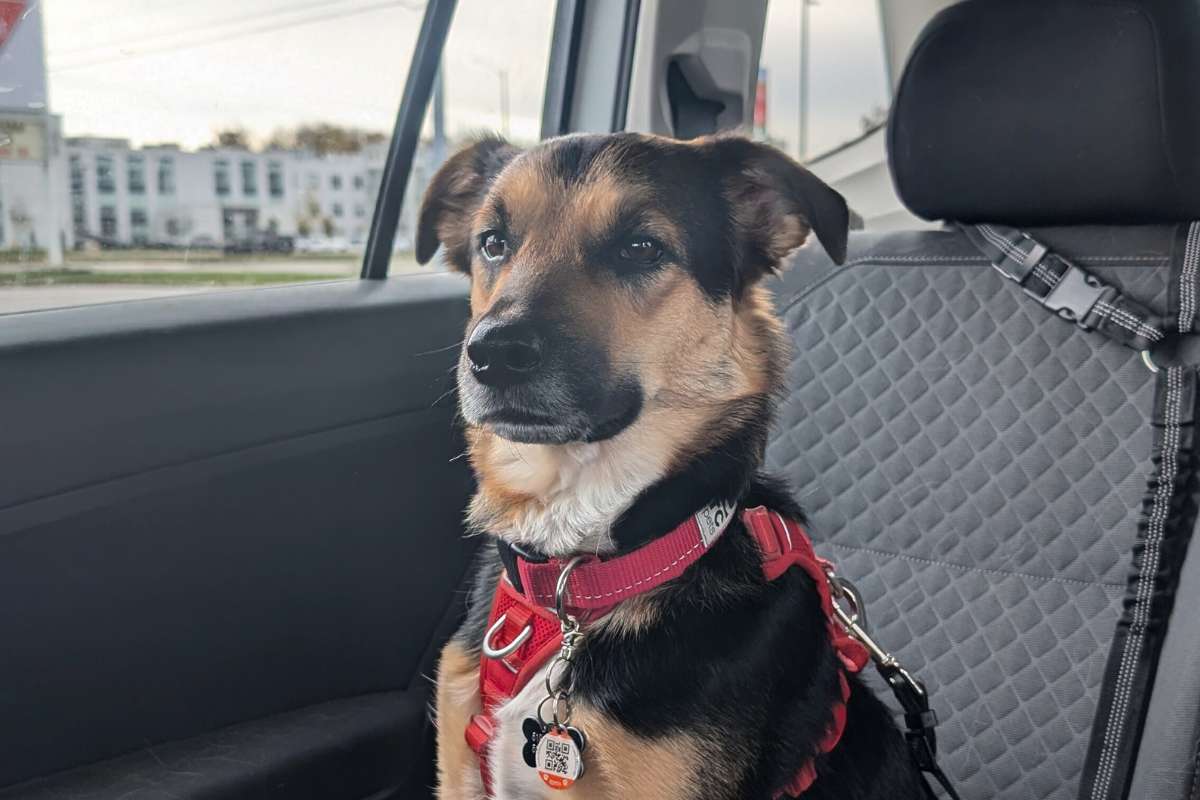
Ensuring your dog’s safety during the ride is essential. Just as we take steps to ensure that every human in the vehicle is safely buckled in, we have to do the same with our pups.
Invest in a high-quality, secure carrier or seatbelt harness designed for dogs.
While these products aren’t cheap, your dog is worth it! If you watch online marketplaces and sales, you may even be able to score a great deal second-hand.
This will prevent your dog from being injured in the event of an accident and will also keep them from distracting the driver.
In addition to keeping your dog safe, setting up a comfortable space can prove helpful in reducing their stress and anxiety throughout the journey.
Providing a soft blanket or bed with your dog’s scent on it can help them feel calmer and more relaxed.
You may also consider playing calming music, offering your dog calming treats, or using a pheromone diffuser in the vehicle to help reduce anxiety.
Packing Essentials
The secret to any successful road trip is to pack everything you need, including any supplies your dog may need.
Pack plenty of food and water, as well as any medications or supplements your dog regularly takes.
Always bring a couple of extra days worth of food and supplies. If you get stuck and can’t get home on schedule, you will still be prepared to care for your pup.
Don’t forget to bring their favourite toys and chews to provide mental and physical stimulation during the drive or when taking a break at rest stops.
Road Trip Strategies
A well-planned route with strategic rest stops can significantly reduce stress for your reactive dog.
This should go beyond just making sure that you plan frequent enough stops. You will need to carefully consider your dog’s triggers and sensitivities to ensure your plans keep your pup’s needs in mind.
Consider the following aspects of your next trip:
Choosing the Right Route
When planning your route, avoid highways and busy roads where possible, as the constant noise and traffic can be overwhelming for a reactive dog.
Instead, opt for quieter, scenic byways that offer a more peaceful driving experience.
Not only will the scenic route be more comfortable for your pup, but I have always believed it to be far more enjoyable as it allows you to explore at your own pace without worrying about constant traffic.
Research your route to identify areas with potential triggers, such as dog parks or heavily populated areas, and plan accordingly.
This takes us to my next point…
Planning Rest Stops
Plan your rest stops in advance to minimize exposure to triggers.
Identify dog-friendly rest stops and parks where your dog can safely do their “business” and stretch their legs. Remember, not all stops are suitable for dogs or offer grassy areas for their needs.
When selecting a rest stop, choose a less crowded area and avoid peak times. Keep your dog on a leash to maintain control, whatever you may encounter.
Try to minimize contact with other dogs or people, especially if your dog is already showing signs of stress or anxiety.
Managing Stress and Anxiety
Speaking of your dog’s big emotions, you need to make decisions that prioritize helping your pup stay calm and relaxed during the journey.
Gentle touch, soothing words, and a calm demeanour can go a long way. This means you need to keep your own emotions in check.
Consider using calming aids, such as pheromone diffusers or calming chews, to further reduce stress.
To prevent boredom and restlessness, especially on longer road trips, provide mental and physical stimulation during rest stops.
You can do this by taking your dog for short walks, playing a game of fetch, or offering puzzle toys to challenge their mind.
We love feeding Lucifer’s meals using puzzle feeders or snuffle mats on our rest stops to give him a positive outlet for any pent-up energy.
Dealing with Unexpected Situations
Even with careful planning, unexpected situations happen. Having a plan to deal with potential triggers or emergencies is essential.
If your dog encounters a trigger, remain calm. Our dogs sense and feed off our energy. If you’re feeling stressed, they will mirror your stress and anxiety.
Instead, use positive reinforcement techniques to redirect your dog’s attention and reward calm behaviour.
If your dog becomes overwhelmed, find a quiet, secluded area where they can de-stress.
On previous trips, when Lucifer became too anxious from a trigger, we would often load him into the vehicle with all his familiar belongings and move the car somewhere secluded, away from anyone else in the area.
Talk to your dog calmly and continue rewarding any calm behaviour.
Don’t rush to get back on the road if possible, or your dog will already be on edge and more likely to react to triggers while you’re on the move (like passing vehicles).
This is why creating a schedule that allows flexibility for additional breaks, if needed, is so important.
Post-Trip Recovery Tips
After a long road trip, it’s important to help your dog recover from the stress and excitement of the journey.
This includes both helping your dog settle when you reach your destination and the recovery period when the vacation is over and you’re home to stay.
Recognizing Signs of Stress
Pay close attention to your dog’s behaviour in the days following the trip.
Look for signs of stress, such as increased anxiety, restlessness, or changes in appetite. This includes subtle behaviour changes that catch your attention.
If you notice any significant changes, consult your veterinarian to rule out any underlying health issues.
Providing Comfort and Support
Create a calm and relaxing environment at home to help your dog de-stress.
Set up your pup’s space with soft bedding and a familiar blanket. A sweater or t-shirt of yours with your scent can also provide comfort.
Avoid overwhelming your dog with excessive attention or activity.
Gradually reintroduce them to their regular routine, allowing them to adjust at their own pace. This usually takes little man Lucifer a day or two after any big adventures.
Get Ready for Your Next Adventure
Road trips with reactive dogs can be a rewarding experience and an opportunity to make incredible memories, but they require careful planning and preparation.
By understanding your dog’s triggers, creating a safe and comfortable environment, and implementing effective stress-management techniques, you can minimize anxiety and ensure everyone enjoys a smooth journey.
Remember, patience and understanding are key when dealing with a reactive dog.
Avoid rushing or forcing your dog into situations that may cause unnecessary stress. Instead, take your time and allow your dog to adjust to new environments at its own pace.
With careful planning, patience, and a little extra effort, you can create a positive and memorable road trip experience for both you and your reactive pup.