5 Fun Ways to Use Mental Enrichment for a More Relaxed Dog
Reactive dogs deal with big feelings. Their heightened sensitivity and impulsive responses can make them anxious and on edge.
However, one approach to addressing these feelings is less discussed: mental enrichment.
While physical exercise is essential, mental stimulation also plays a critical role in calming their anxious energy and reducing reactivity.
Mental enrichment involves providing dogs with activities that challenge their minds, such as puzzle feeders, training sessions, and nose work.
These activities not only keep dogs occupied but they also help them learn new skills, build confidence and reduce stress.
When a dog’s mind is engaged, it helps them focus less on external triggers that may cause stress or anxiety, leading to a reactive response.
Including mental enrichment in your dog’s daily routine will help them be calmer and more balanced. This, in turn, can significantly improve their overall quality of life and your bond with them.
Interested in learning more? Keep reading…

Puzzle Feeders
A great option for reactive dogs, puzzle feeders are interactive feeding bowls or devices that require dogs to work for their food.
Instead of simply gobbling down their meal (which Lucifer would, without hesitation), the puzzle feeder means they must use their problem-solving skills to access the food hidden within.
Accessing their reward may involve sliding compartments, flipping lids open, snuffling under fabric loops or flaps, removing cups, rotating pieces, etc.
This slow feeding method prevents your dog from eating too quickly, reduces potential digestive issues, and challenges their mind. It can help reduce anxiety, boredom, and destructive behaviours.
Additionally, the act of foraging for food is a natural instinct for dogs, and puzzle feeders tap into this primal drive.
Consider your dog’s skill level and experience when choosing a puzzle feeder. Jumping into something too challenging can create unnecessary frustration.
Start with a simple puzzle and gradually introduce more challenging options as your dog develops their problem-solving skills.
You can also create your own DIY puzzle feeders using common household items like cardboard boxes, muffin tins, or even a simple towel.
Training Sessions
Positive reinforcement training is a powerful tool for mental stimulation and behaviour medication, making it an excellent option for addressing your dog’s reactivity.
By rewarding your dog for desired behaviours, you create a positive association with training and encourage them to repeat those behaviours.
This not only improves obedience (we all want a well-behaved dog) but also boosts your dog’s confidence and self-esteem.
Ask any professional, and they will tell you one of the most important things you can do for your reactive pup is to build their confidence and help them feel more comfortable in their space.
Training sessions can be mentally challenging for dogs, especially when you introduce new commands or tricks.
This mental exercise can help tire them out, reduce their energy levels, and make them feel more relaxed.
Consider incorporating training games like hide-and-seek or fetch with a twist. This will help challenge your dog to think and problem-solve while having fun and building your bond.
To avoid overwhelming your dog, break down training sessions into short, positive sessions.
Keep your training sessions upbeat and reward-based, ending on a positive note. This will help prevent frustration and ensure your dog associates training with positive experiences.
Nose Work
A fun activity, nose work challenges your dog to use their sense of smell to find hidden objects.
This can be highly beneficial for reactive dogs because it provides them with an outlet for their energy and focus. You can help calm their minds and reduce anxiety by engaging their noses.
To create a nose work game at home, simply hide treats or toys around your house or yard.
Start with easy hides and gradually increase the difficulty as your dog becomes more proficient. Use high-value rewards, such as small pieces of cheese or chicken, to motivate your pup and make the game more enticing.
As your dog progresses, you can make nose work more challenging by hiding the treats in more difficult locations or using more complex scents.
At this stage, consider purchasing a nose work kit or using essential oils to create scent trails or puzzles.
Interactive Toys
Do you have a toy-loving dog? If so, this one’s for you! Interactive toys are designed to keep dogs engaged and entertained – and Lucifer can’t agree more.
By providing opportunities for problem-solving, foraging, chewing, and physical activity, these toys can help to reduce boredom, anxiety, and other unwanted or destructive behaviours.
When choosing a new toy for your dog, consider their size, breed, and energy level.
Puzzle-style toys require dogs to manipulate the toy to access treats, offering excellent mental stimulation.
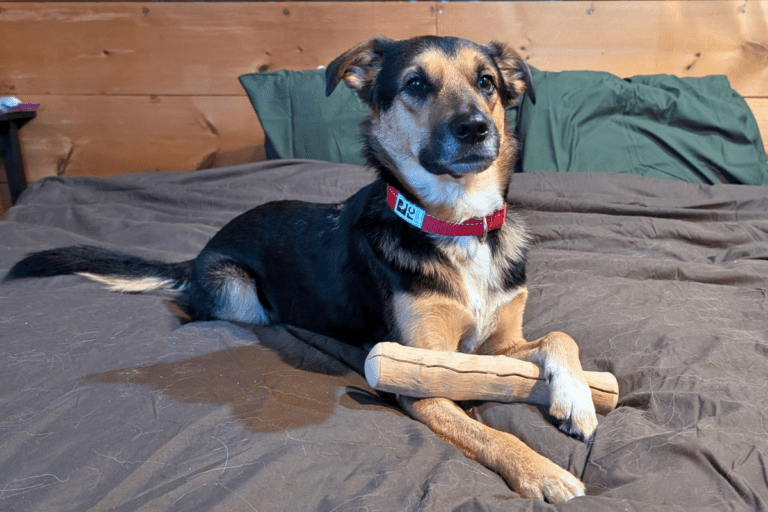
Chew toys provide both physical and mental exercise. For dogs with high chewing drives, this gives them a great alternative to chewing on things they shouldn’t, like your furniture or shoes.
Fetch toys, such as balls or frisbees, can be mentally stimulating. They also allow you and your dog to play together, strengthening your bond.
Try regularly rotating your dog’s toys to keep them engaged and prevent boredom.
We have Lucifer’s toys sorted into three separate baskets. Once a month, we swap them out, making his toys appear new and exciting all over again.
Training Classes and Doggy Playdates
This last option will depend highly on your dog’s feelings about other dogs. If dogs are a reactivity trigger, this can do more harm than good.
By exposing your dog to a variety of people, dogs and environments, you can help them develop appropriate social skills, reducing their fear and anxiety in these situations in the future.
In a positive reinforcement-based training class, your dog will learn to interact with other dogs and people in a controlled and positive setting.
This can help them build confidence and overcome fears while preventing potentially upsetting situations, like a strange dog running up to them unmanaged.
Training classes are also a great option for mental stimulation as your dog learns new tricks and commands.
When selecting playdates, you want to choose safe and compatible playmates. A bad experience could lead to further reactivity issues.
Look for dogs that have similar energy levels and play styles.
Supervise playdates closely and intervene if any signs of stress or aggression are seen from any of the dogs involved.
Tap Into the Potential of Mental Enrichment for Your Reactive Dog
Incorporating mental enrichment into your dog’s daily routine can offer a positive outlet for excess energy.
Puzzle feeders, training sessions, nose work, interactive toys, and social activities offer a variety of ways to stimulate your dog’s mind and reduce anxiety.
Remember, consistency is key!
Make mental enrichment a regular part of your dog’s day, and be patient. It may take time to see significant changes in your dog’s behaviour.
Mental enrichment isn’t a magic fix-all for your dog’s behaviour. But it is a helpful piece of the greater puzzle.
Consider consulting with a dog trainer or certified behaviourist if your dog’s reactivity is severe.
By providing your dog with the mental and physical stimulation they need, you can help them live a happier, healthier, and more fulfilling life.