Holiday Survival Guide for Reactive Dog Parents
The holiday season is often seen as a time of joy, cheer, and heartwarming family gatherings.
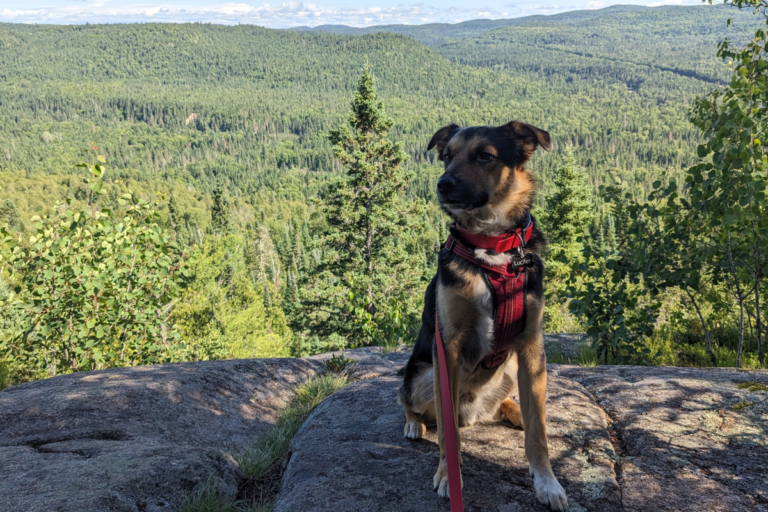
But if you are a parent to a reactive dog (like my incredible boy, Lucifer), you know that the reality can be far more complex.
For us, the holidays can bring a mix of anticipation and deep, sinking dread. We aren’t worried about the presents or the menu; we’re concerned about the unpredictability.
We worry about the sudden shift in routine, the constant barrage of doorbells, the rotating door of unfamiliar faces, and the sensory overload.
You know the pressure: the desire to host, the guilt of feeling isolated, and the absolute commitment to ensuring our dogs don’t just “get through” the season, but feel genuinely safe and comfortable in their own homes.
When Lucifer and I first navigated the holidays, it was a steep learning curve.
I quickly realized that even before the first guest arrived, the noise and visual stimulation of the season had already ramped up his stress levels.
This post is for every reactive dog parent who is working to put their dog’s peace first.
I’m going to cover practical, proactive steps to manage holiday stress, ensuring that this season your dog can find their calm despite the festive storm.

Understanding the Holiday Overload
If you live with a reactive dog, you’re already hyper-aware of your environment. We have to be.
You notice the triggers down the street, the sound of the approaching mail truck, and even the smallest changes in your dog’s body language.
But the holidays aren’t just one big trigger; they’re a massive, layered increase in stress levels that affects our dogs even when the front door stays closed.
Think of it this way: for much of the year, we work hard to keep the volume of our dog’s world at a manageable level.
During the holidays, that volume knob is cranked to the max, often silently, well before the big event.
The Invisible Sensory Flood
The season itself introduces a vast mix of stimuli that can quickly fill your dog’s stress bucket, making them more likely to react to even the most minor triggers.
As loving dog parents, the first step in understanding our dog’s struggles is to recognize the triggers they may encounter
NOISE AND SOUND:
- Increased Delivery Traffic: The constant stopping, starting, and backing up of delivery vans and neighbourhood traffic.
- Carols and Music: Holiday tunes, either on the radio, streaming, or even loud carolling outside, can disrupt a dog who relies on auditory calm.
- Neighbourhood Activity: Kids are out of school, neighbours are socializing more, leading to increased foot traffic, barking, shouting, and general commotion near your property line.
- The Doorbell/Knock: This is the most infamous holiday villain. Even if you don’t answer it, the persistent ringing or thudding is a piercing alarm signal.
LIGHT AND VISUAL CHANGES:
- Twinkling Decorations: Bright, flashing, or rapidly moving lights on trees or outside windows can be visually unsettling or even trigger a chase response for some dogs.
- Interior Decorating: Bringing in a tree, moving furniture, or hanging decorations completely changes your dog’s familiar landscape, taking away their environmental predictability.
- Unexpected Reflections: New decorations or light sources can cast strange shadows or reflections, creating “ghosts” in the house that a vigilant dog like Lucifer feels obligated to patrol or bark at.
SMELL AND ROUTINE DISRUPTION:
- Intense Aromas: The strong scents of holiday cooking (spices, roasting meats), festive candles, or fresh pine trees introduce powerful new stimuli to your dog’s sense of smell.
- Schedule Shift: Even dedicated dog parents have moments where a holiday errand or last-minute prep pushes back a meal or walk time by just an hour. These minor disruptions accumulate, chipping away at your dog’s sense of routine security.
The Stress Barrel Metaphor
We often use the stress barrel analogy when working with a reactive dog, and it is never more relevant than during the holidays.
Imagine your dog has a stress barrel that is already half-full just from the usual stress baseline of life.
When the holidays hit:
- The noise from the neighbour’s party adds a few inches
- The flashing Christmas lights add a few more
- The interruption of the evening decompression walk adds a significant pour
Management is not about magically emptying their barrel; it’s about diligently ensuring that the added holiday stress doesn’t cause it to overflow into a full-blown reactive episode.
I remember realizing how high Lucifer’s ambient stress was one December a few years ago.
We hadn’t had guests, but he was suddenly pacing near the window, something he hadn’t done since we moved in. The only change was the new decorations the neighbours had put up and the constant stream of Amazon delivery vans.
It wasn’t the decorations themselves. There was no one snowman or Santa that had set him off. It was the cumulative effect of all the visual and auditory triggers.
That’s when I understood that our management plan couldn’t just focus on the few hours guests were visiting; it had to concentrate on de-stimulating the entire month to lower that baseline stress level.
Creating the Ultimate Safe Space
When the world outside the window, and even around your home, is dialled up to eleven, your dog needs a place where they can escape from the noise.
This is not just a crate or closed room; this is their sanctuary, their dog den.
Crucially, this space is not a punishment or a time-out area; it is a strategically designed haven where safety, comfort, and predictability reign supreme.
It is their reward for tolerating the chaos of the season.
If you don’t already have one, the time to build this space is now, well before any holiday stressor even appears.
The effectiveness of this space hinges on two concepts: Isolation and Positive Association.
- Location: Choose a spot far from the front door and main gathering areas, such as a spare bedroom or quiet office. The goal is to minimize access to triggers and limit the exposure to noise and activity.
- Sensory Neutralization: Not all input can be stopped. Instead, you must work to neutralize any that enters the space. Use white noise machines or fans to mask the sound of doorbells and loud chatter. Use blackout curtains or crate covers to eliminate visual triggers, such as flashing lights or movement outside.
- Comfort and Positivity: Fill the space with their absolute favourites, and most importantly, reserve the highest-value chews or treats only for this area. This reinforces the idea that the sanctuary guarantees the best possible outcome when stress is high.
- Start Now: This space must be a familiar and deeply ingrained, happy habit before stress levels rise. Introduce the routine weeks in advance so that on the day of the party, sending your dog to their space is a comfortable, predictable part of the routine, not a sudden, stressful change.
For Lucifer, his safe space is a corner of our bedroom near my work area. This is in the back of the cabin, away from the front door, living room, and other high-traffic spaces.
The space is equipped with a fan, his favourite bed, his cozy blankets (with his scent), and his favourite chew toys.
Having this set up has been the single most effective tool in ensuring he can feel secure and settled through the chaos.
To learn more about setting up this space, check out: How to Create a Fear-Free Space at Home
Becoming Your Dog’s Advocate: Setting Boundaries with Guests
You can create the most perfect, soundproof sanctuary for your pup, but if you don’t manage the people who come into your home, all that hard work can be undermined in seconds.
As a reactive dog parent, you play a crucial role during the holidays. You are your dog’s Chief Boundary Officer and fiercest advocate.
It starts with you committing to prioritizing your dog’s emotional well-being over any awkwardness or social discomfort.
For dogs like Lucifer, the surprise of an approaching hand, the insistent staring of a well-meaning relative, or the sudden, unpredictable movement of a child is often the trigger that pushes them over the edge.
Our job is to eliminate those surprises entirely.
The Pre-Visit Briefing
Never let a guest arrive without a clear understanding of the situation they are walking into. This is not rude; it is responsible hosting.
By setting expectations early, you remove the awkwardness of enforcing the rules in the moment.
Send a quick, friendly, but firm text or email a day or two before any planned gatherings. You don’t need to apologize for your dog’s existence. Keep it factual and focused on management.
Here’s a gentle but firm script you can follow:
“We are so excited to see you! Just a quick heads-up: Lucifer struggles with meeting new people and navigating high-energy gatherings. For his comfort and everyone’s safety, he will be resting in his quiet room for the duration of the visit. Please help us keep him happy and safe by completely ignoring him if you see him. No eye contact, no talking, and definitely no attempting to pet him. Thank you for respecting his needs!”
This sets you up for success both when your dog is in their sanctuary and at any moment they must pass by the action, for example, when they go outside.
The Doorbell/Entry Protocol
This is arguably the most volatile moment of any visit. The stress of the doorbell and the sudden appearance of people (familiar or unknown) is a recipe for a full-blown reaction.
Before the first guest arrives, ensure your dog is already in their safe space.
Give them a high-value chew before the first ring. The sound of the doorbell should mean, “I get my favourite thing,” not, “Intruders are coming!”
Use a baby gate or keep a door securely shut between your dog’s area and the front entrance. Never trust a door latch alone when a reactive dog is excited.
The Leash Indoors Policy
For moments when your dog must briefly leave their safe space or pass nearby the activity, like a necessary potty break, use a leash and harness, even if you are just stepping into the hallway.
Keeping your dog on a short leash and harness gives you reliable control.
It allows you to move them swiftly and calmly past any guests without physically grabbing or wrangling them, helping you avoid trouble.
The leash also acts as a visual reminder to your guests: This dog is in management mode. Do not approach.
Addressing Guest Behaviours
You must be prepared to intervene politely but quickly if a guest breaks a boundary. This requires vigilance, but it can be made easier if you have a prepared statement.
Watch out for the relative who insists, “Oh, I’m a dog person, he loves me!” or the child who tries to stick their fingers through the gate despite being told otherwise.
Remember, your rule is zero interaction. Enforcing that doesn’t make you rude; it makes you a responsible dog parent.
Children are fast, unpredictable, and often the biggest risk factor. They should not be allowed near the dog’s safe space door, even if it is closed.
I’ve had to gently but firmly redirect older family members who wanted to “talk to Lucifer through the door.”
My response is generally something like this: “His boundaries are non-negotiable right now, just like his safety. Thank you for helping me keep him happy.”
Prioritizing Lucifer’s peace over a guest’s temporary disappointment is sometimes necessary. Your dog will thank you for it.
Managing the Volume Levels
Even with a perfect safe space and iron-clad guest boundaries, the holidays introduce a low-level hum of activity and sensory input that can keep a reactive dog on high alert.
The best solution is to proactively control your dog’s environment, effectively turning down the volume of the world.
Think of environmental management as a constant, subtle counter-conditioning exercise.
If everything is calmer, your dog’s nervous system gets a chance to rest, making them more resilient when an inevitable loud noise or sudden flash occurs (after all, we can’t control everything).
Proactive Environmental Control
You have the power to manage much of the stimuli inside your home. Don’t underestimate the impact of subtle changes!
Avoid harsh, bright overhead lights.
Switch to softer, warmer lamp lighting. Not only does this create a cozier atmosphere for your guests, but it is far less jarring for a dog sensitive to visual triggers.
If you use decorative lighting, opt for static or very slow-fade lights. Rapidly flashing, twinkling, or strobe-like lights can be incredibly agitating, potentially triggering chase instincts or defensive pacing.
If a string of lights is a constant trigger, it’s better to skip it this year.
Keep background music low and perhaps choose calmer genres. Loud, upbeat, or bass-heavy music adds physical vibration and auditory stress.
If the television is on, mute it or keep the volume low. News broadcasts, action films, or loud sporting events can contain sudden, startling noises that trigger an immediate reaction.
If possible, temporarily disconnect or cover your doorbell/knocker and rely on text messages from arriving guests. This removes the explosive sound trigger from your day.
The Decompression Strategy
Sometimes, the best management tool is simply removal. Scheduling a deliberate break, both for your dog and for yourself, can be a game-changer during the holidays.
Plan a long, quiet walk or a sniffari (a walk dedicated solely to sniffing, which is a key mental enrichment activity) during the peak of guest activity or right before.
This strategy has two benefits: it removes your dog from the most stressful part of the gathering and provides them with a significant mental and physical outlet to “process” the stress they’ve already encountered.
If walking isn’t an option, or if the weather is terrible (a 15-20 minute quiet retreat in your car (with ventilation and proper temperature control, of course) can work wonders.
Drive to a quiet cul-de-sac or park and let them just observe calmly, away from the immediate chaos in your house.
Post-Visit Wind Down
The moment the last guest leaves and the door closes is not the end of the management process; it’s the beginning of the crucial wind-down phase.
Don’t immediately rush to let your dog out of their safe space. Wait until the house is genuinely quiet and the energy has dropped completely.
Once they are out, engage in a low-key, predictable activity.
Choose an activity that helps your dog feel relaxed. This might be a quiet cuddle session, a gentle brushing, or providing them with another long-lasting chew in a neutral area.
The goal is to signal to your dog’s nervous system that the threat is over, the environment is safe, and it’s time to rest and recover.
For Lucifer, who finds the most comfort in being close to me, our go-to is a cuddle session.
The Gift of Peace This Holiday Season
The greatest gift we can give our reactive dogs during the holidays is not a perfect celebration, but the unwavering commitment to their peace and comfort.
By prioritizing their safe space and setting firm boundaries, you are successfully managing the season and ensuring your dog’s sense of safety is your highest priority.
Go into this season as your dog’s fiercest advocate, and enjoy the quiet comfort that comes from a job well-managed.